
German emigration records can be essential tools for genealogists seeking to trace their roots and understand their family’s migration history. These records may include the names of the emigrant ancestor and his family, occupations, birth dates, ages of children, where they are emigrating to and why, and more. So definitely worth looking for!
That being said, they can be a bit overwhelming to work with. So let’s break it down.
Where to Find German Emigration Records:
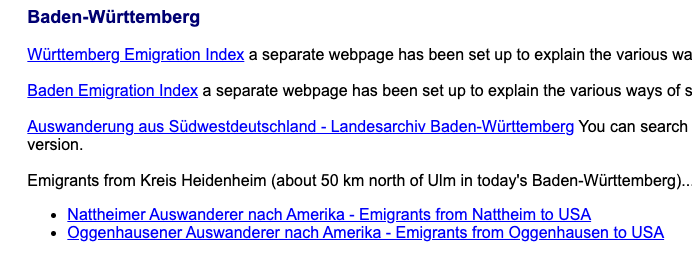
The website German Roots has a wonderful list of links by state for emigration records. Check out the list here.
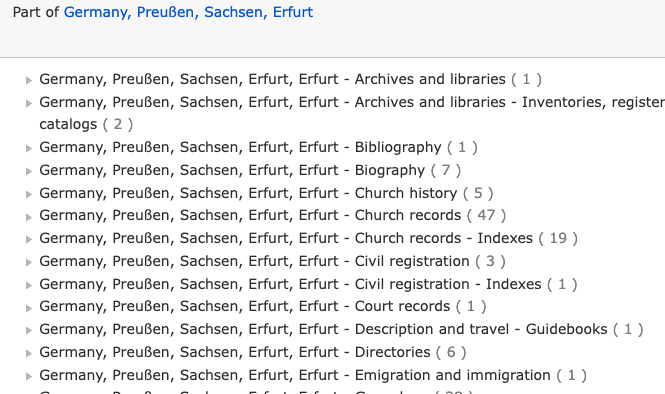
FamilySearch also has emigration lists. Go here and type in your ancestor’s hometown. If they have emigration lists for that area, they will be listed off to the right side. Click on it to find how to access.
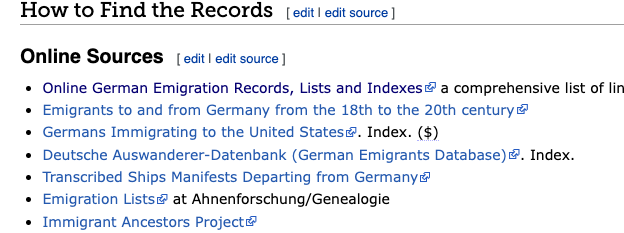
The FamilySearch German Genealogy Page also has an amazing list of links, depending on your state of origin. See that list here.
Working with the Records
In emigration records, it’s helpful to know what to expect. With the records I have worked with, you will usually find:
- The person’s name
- Occupation
- Where they intend to emigrate to
- Why they intend to emigrate
- Who is emigrating with them (wife, children, etc)
- If they have completed their military service or if they are exempt
- That they renounce their citizenship/subjecthood to a certain state
Samples:
Erschien der Weber Georg Schwarz aus Hanover und trug vor:
Meine Absicht ist im September d.J. mit Familie, bestehend aus Frau und 4 Kindern nach America auszuwandern, und habe ich den Auswanderungsconsens dazu heute beantragt. Die Reise dorthin werde ich über Bremen nehmen.
The weaver Georg Schwarz from Hanover appeared and stated:
It is my intention to emigrate to America in September of this year with my family, which consists of my wife and 4 children. I submitted the emigration consent form today. I will travel to America via Bremen.
Mit Rücksicht auf den § 15 der Militär Ersatz Instruktion vom 9. December 1858 wird hiermit bescheinigt, daß der am 8. August 1844 geboren, mithin im 20ten Lebensjahre sich befindende Schwarz Georg aus Hanover die Entlassung aus dem Preußischen Unterthanen Verbande nicht blos in der Absicht nachsucht, um sich der Militärpflicht im stehenden Heere zu entziehen.
In consideration of § 15 of the military reserve procedure of December 9, 1858, it is hereby certified that Georg Schwarz of Hanover, born on August 8, 1844, presently 20 years of age, does not seek release from Prussian subjecthood in order to avoid his military duty in the standing army.
Der Sohn des Unterzeichneten Wilhelm Heinrich Grabenhofer laut beigelegten Tauf u. Geburtsschein am 16ten Januar 1866 geboren beabsichtigt nach Amerika auszuwandern, da ihm dort zur Begründung einer Lebensstellung Bruder und Verwandte seiner Familie zur Seite stehen, der Unterzeichnete erlaubt sich deshalb eine Hohe Königliche Regierung zu bitten, hoch dieselbe wolle gestatte, daß sein Sohn Wilhelm Heinrich Grabenhofer behufs Auswanderung nach Amerika aus dem deutschen Unterthanenverband ausscheide.
The son of the undersigned Wilhelm Heinrich Grabenhofer, born on January 16, 1866 according to the enclosed baptismal and birth certificates, intends to emigrate to America, as his brother and relatives of his family will assist him there by means of an established position. The undersigned therefore takes the liberty of requesting the Royal Government to allow that his son Wilhelm Heinrich Grabenhofer withdraw from the German subjecthood for the purpose of emigrating to America.
Some Vocabulary You’ll See:
- auswandern – emigrate
- Auswanderung – emigration
- beabsicht – intends
- beantragt – submitted
- bescheinigt – certified
- Entlassung – release
- Entlassungsschein/Entlassungsurkunde – certificate of release (from subjecthood)
- erschien – appeared
- Gesuch – petition
- nach – to (as in “to America”)
- Regierung – government
- Untert(h)an – subject (of a prince, etc.)
- Untert(h)anenverband – group of subjects
- Unterzeichnete – undersigned
Any good emigration resources you know of? Let us know in the comments!
For more help with emigration documents, check out our Emigration Article Package here.
4 Responses
May I share this with my Genealogy Society?
Yes, please just attribute it to Germanology Unlocked with a link to the original blog post. Thanks for asking!
What a wealth of information! It doesn’t apply to me. but, I am sure this will help others in their research
I’ll preface my comments by noting that my experience with emigration and immigration is limited to emigrants from the states of North-Rhine Westphalia, Hanover (now Niedersachsen), Mecklenburg-Schwerin (now Mecklenburg-Vorpommern) and Brandenburg migrating to North America between 1854-1881. Some of the resources I’ve found helpful in finding departure and arrival records and information about their emigration experiences include:
* Ancestry (of course!), with Passenger Lists for those departing from Hamburg or arriving at Castle Garden, NY and other US ports, as well as Naturalization cards.
* The USCIS Genealogy Program for naturalization record requests (which sometimes provide dates and locations of arrivals).
* The Library and Archives Canada (LAC) Passenger Lists database for passengers who arrived in Quebec city from 1865-1935.
* State Archives in German Federal States for indexes or copies of emigration permits (Auswanderungs-Consens or Entlassungs-Urkunde) for citizens who wished to emigrate.
* The German Emigration Museum (Deutsches Auswandererhaus) in Bremerhaven, which provides interactive experiences of the emigrants’ experiences at the ports of departure and on the journey when traveling in steerage, research stations and books detailing what their experiences were like upon arrival at immigration stations in North America would have been like).
* The BallinStadt – Emigrant Museum Hamburg (Auswanderermuseum BallinStadt).
* Castle Clinton (f/k/a Castle Garden Emigrant Landing Depot) National Monument in Battery Park, Lower Manhattan, New York
* A book written by Johannes Gilhoff called Jürnjakob Swehn: Der Amerikafahrer (Letters of a German American Farmer: Jürnjakob Swehn Travels to America).